A simile is a figure of speech that compares two different things using words like “as” or “like.”
Writers use similes to make ideas clearer, more emotional, and more vivid.
Death is one of the deepest and most mysterious topics in life, and similes help express it gently, poetically, or even peacefully.
In this article, you’ll discover 16+ meaningful similes for death with explanations and examples to inspire your writing.
What Is a Simile?
A simile is a comparison between two different things using “like” or “as.”
It helps readers imagine emotions, actions, or experiences more clearly by linking them to something familiar.
For example:
“Life is like a journey.”
This makes the idea of life easier to understand.
Full List of 16+ Similes for Death
Below is a carefully crafted list of similes for death. Each includes meaning, a short definition, and example sentences to help you understand and use them naturally.
Like a candle blown out by the wind
Meaning: Death happens quietly or suddenly.
Definition: Compares death to a candle flame that disappears when the wind blows.
Examples:
- His life ended like a candle blown out by the wind.
- She passed away softly, like a candle blown out in the night.
Like a leaf falling from a tree
Meaning: Death is natural and part of life’s cycle.
Definition: Suggests that death is as natural as leaves falling in autumn.
Examples:
- He drifted away like a leaf falling from a tree.
- Her final breath was gentle, like a leaf falling in October.
Like the setting sun
Meaning: Death marks a peaceful ending.
Definition: Compares death to the sun slowly disappearing below the horizon.
Examples:
- His life faded like the setting sun.
- She left the world like the sun setting after a long day.
Like a door closing softly
Meaning: Death is quiet and calm.
Definition: Suggests a gentle and silent end.
Examples:
- Her passing was like a door closing softly.
- His final moments were like a quiet door shutting at dusk.
Like a ship sailing into the mist
Meaning: Death leads into the unknown.
Definition: Compares death to a ship disappearing into fog.
Examples:
- He departed like a ship sailing into the mist.
- She vanished from life like a boat lost in fog.
Like a flower wilting in winter
Meaning: Life slowly fades away.
Definition: Shows death as a gradual loss of strength.
Examples:
- His strength faded like a flower wilting in winter.
- She grew weaker, like petals dropping in the cold.
Like a clock that stops ticking
Meaning: Life suddenly ends.
Definition: Compares death to a clock that no longer moves.
Examples:
- His heart stopped like a clock that stops ticking.
- Her laughter ended like a silent clock.
Like a shadow disappearing at dawn
Meaning: Death removes presence completely.
Definition: Suggests someone vanishes as darkness fades in morning light.
Examples:
- He disappeared like a shadow at dawn.
- Her presence faded like a night shadow in sunrise.
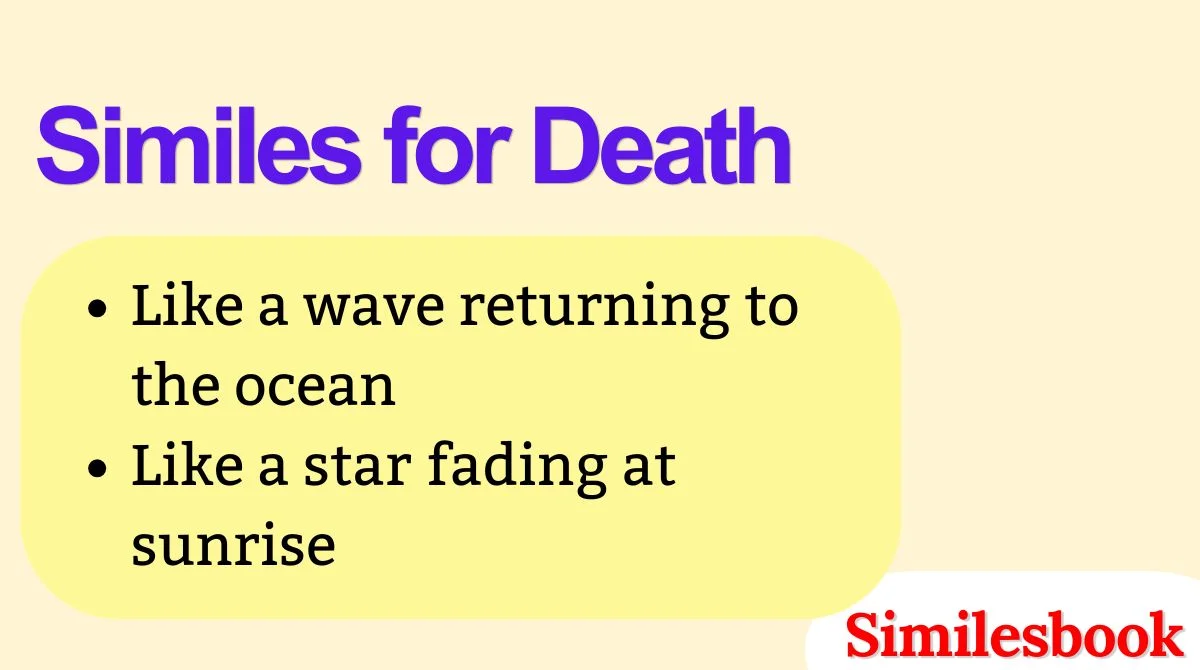
Like a star fading at sunrise
Meaning: Death is quiet and gentle.
Definition: Compares death to a star slowly losing its brightness.
Examples:
- She passed like a star fading at sunrise.
- His life dimmed like the last star of the night.
Like a wave returning to the ocean
Meaning: Death is a return to where life began.
Definition: Suggests life merges back into something greater.
Examples:
- He went like a wave returning to the ocean.
- Her soul drifted away like water back to the sea.
Like a book closing after the final page
Meaning: Life’s story has ended.
Definition: Compares death to finishing a story.
Examples:
- His life ended like a book closing after the final page.
- She completed her journey like the last chapter closing.
Like a bird flying beyond the horizon
Meaning: Death is a departure to somewhere unseen.
Definition: Suggests moving beyond this world.
Examples:
- He left like a bird flying beyond the horizon.
- Her spirit soared away like a distant bird.
Like frost melting in the sun
Meaning: Life slowly disappears.
Definition: Compares death to something gently vanishing.
Examples:
- His breath faded like frost melting in sunlight.
- She slipped away like ice under warm rays.
Like a dream fading at morning
Meaning: Death feels unreal or distant.
Definition: Suggests life disappears like a forgotten dream.
Examples:
- His presence vanished like a dream at morning.
- She was gone like a fading dream.
Like autumn turning into winter
Meaning: Death is part of life’s natural seasons.
Definition: Shows death as a seasonal transition.
Examples:
- His life changed like autumn turning into winter.
- She passed as quietly as fall becoming winter.
Like a flame running out of oil
Meaning: Life slowly loses energy.
Definition: Compares death to a lamp that can no longer burn.
Examples:
- His energy drained like a flame running out of oil.
- She faded like a lamp with no fuel left.
Like footsteps disappearing in the sand
Meaning: Death leaves no physical trace.
Definition: Suggests that presence fades with time.
Examples:
- His memory felt like footsteps disappearing in the sand.
- She was gone like prints washed away by waves.
🎨 Turn These Similes into Powerful Creative Writing
Similes for death can add emotion, softness, and poetic beauty to your writing. Here’s how you can use them creatively:
In Poetry
- Use gentle similes like “like a leaf falling from a tree” to create peaceful imagery.
- Combine seasonal similes with themes of change and rebirth.
In Short Stories
- Use similes to describe a character’s final moment without being harsh.
- Choose soft comparisons to maintain emotional tone.
In Songs
- Similes help express grief in a symbolic way.
- For example, “like a star fading at sunrise” sounds lyrical and meaningful.
In Essays
- Use similes to explain philosophical views of life and death.
- They make abstract ideas easier to understand.
Pro Tip:
Match the simile with the tone of your writing:
- Peaceful tone → sunset, leaf, star
- Sudden tone → clock stopping, candle blown out
- Emotional tone → dream fading, footsteps disappearing
FAQs About Similes for Death
### What is a simile for death?
A simile for death compares death to something else using “like” or “as,” such as “like a candle blown out.”
### Why do writers use similes for death?
Writers use similes to soften the topic, make it poetic, and help readers understand emotions more deeply.
### Are similes for death always sad?
No. Some similes show peace, transition, or natural change rather than sadness.
### Can I use similes for death in formal writing?
Yes, especially in literature, essays, speeches, and reflective writing.
### What is the difference between a simile and a metaphor?
A simile uses “like” or “as” to compare, while a metaphor directly states that one thing is another.
Conclusion
Similes for death help writers express one of life’s most serious topics with beauty, peace, and emotion.
Whether comparing death to a setting sun, a fading star, or a closing book, these comparisons make writing more meaningful.
Try using these similes in your poems, stories, and essays to create powerful and gentle imagery.