Sadness is one of the most common human emotions, and writers often use similes to describe it in creative ways.
A simile compares one thing to another using “like” or “as,” making emotions easier to imagine.
Similes for sadness help readers feel the depth of emotion.
In this article, you’ll discover powerful, easy-to-understand similes that can improve your writing, poems, stories, and everyday expression.
Quick Definition of a Simile
A simile is a figure of speech that compares two different things using the words “like” or “as.” It helps readers understand feelings or ideas by connecting them to something familiar.
For example: Sad as a rainy day.
This comparison makes sadness easier to picture and feel.
Quick Overview Table of Similes for Sadness
| Simile | Emotional Meaning |
|---|---|
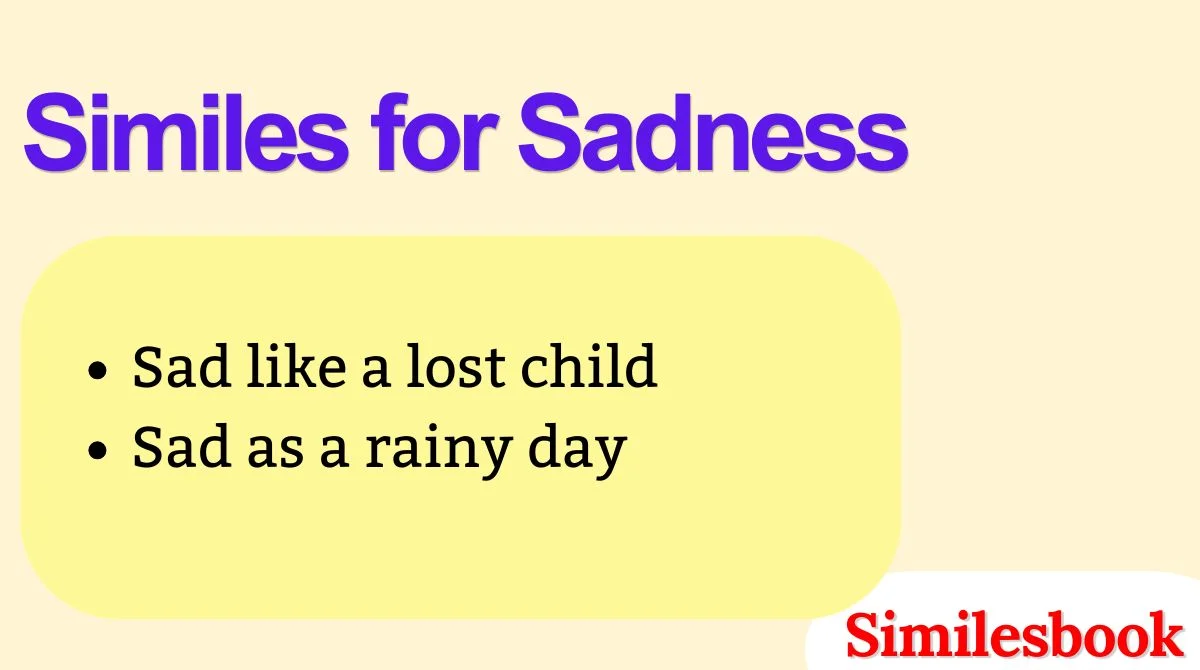
| Sad as a rainy day | Deep emotional gloom |
| Sad like a lost child | Feeling alone and confused |
| Sad as a broken mirror | Feeling emotionally shattered |
| Sad like a dying flower | Losing hope or strength |
| Sad as an empty room | Feeling lonely |
| Sad like a cloudy sky | Feeling emotionally heavy |
| Sad as a forgotten song | Feeling ignored |
| Sad like a sinking ship | Losing hope |
| Sad as winter without snow | Cold and empty feeling |
| Sad like fading light | Slowly losing happiness |
| Sad as a silent forest | Deep quiet sorrow |
| Sad like fallen leaves | Feeling lost or abandoned |
| Sad as a crying baby | Pure emotional pain |
| Sad like a dark night | Feeling hopeless |
| Sad as an abandoned house | Feeling forgotten |
| Sad like melting ice | Slowly breaking inside |
| Sad as a lonely star | Feeling isolated |
| Sad like a wilted rose | Lost beauty or joy |
| Sad as an empty heart | Deep emotional emptiness |
| Sad like broken wings | Unable to move forward |
| Sad as cold rain | Sharp emotional pain |
| Sad like a lost traveler | Confused and alone |
| Sad as fading memories | Emotional loss |
| Sad like a silent tear | Quiet, hidden sadness |
Full List of Similes for Sadness
Sad as a rainy day
Meaning: Feeling gloomy and low.
Definition: This simile compares sadness to a rainy day, which often feels dark and depressing.
Examples:
- She felt as sad as a rainy day after hearing the news.
- His heart was sad as a rainy day when she left.
Sad like a lost child
Meaning: Feeling alone and helpless.
Definition: This simile compares sadness to the confusion and loneliness of a lost child.
Examples:
- He looked sad like a lost child in the crowd.
- Without her friends, she felt sad like a lost child.
Sad as a broken mirror
Meaning: Feeling emotionally shattered.
Definition: This simile shows sadness as something damaged and hard to fix.
Examples:
- His heart was sad as a broken mirror after the breakup.
- She felt sad as a broken mirror inside.
Sad like a dying flower
Meaning: Losing hope and energy.
Definition: This simile compares sadness to a flower slowly losing life.
Examples:
- She looked sad like a dying flower.
- Without hope, he felt sad like a dying flower.
Sad as an empty room
Meaning: Feeling lonely and abandoned.
Definition: This simile compares sadness to a space with no people or warmth.
Examples:
- The house felt sad as an empty room.
- He was sad as an empty room without her.
Sad like a cloudy sky
Meaning: Feeling heavy and dark emotionally.
Definition: This simile connects sadness to dark clouds covering the sky.
Examples:
- Her face was sad like a cloudy sky.
- He felt sad like a cloudy sky all day.
Sad as a forgotten song
Meaning: Feeling ignored and unimportant.
Definition: This simile compares sadness to something once loved but now forgotten.
Examples:
- She felt sad as a forgotten song.
- He was sad as a forgotten song in her life.
Sad like a sinking ship
Meaning: Losing hope completely.
Definition: This simile compares sadness to something slowly going down.
Examples:
- He felt sad like a sinking ship.
- Her dreams were sad like a sinking ship.
Sad as winter without snow
Meaning: Feeling cold and empty.
Definition: This simile compares sadness to winter lacking beauty.
Examples:
- His life felt sad as winter without snow.
- She was sad as winter without snow.
Sad like fading light
Meaning: Slowly losing happiness.
Definition: This simile compares sadness to light disappearing.
Examples:
- His smile faded, sad like fading light.
- She felt sad like fading light.
Sad as a silent forest
Meaning: Deep and quiet sadness.
Definition: This simile compares sadness to a forest without sound.
Examples:
- He stood sad as a silent forest.
- Her heart was sad as a silent forest.
Sad like fallen leaves
Meaning: Feeling abandoned.
Definition: This simile compares sadness to leaves separated from their tree.
Examples:
- She felt sad like fallen leaves.
- He was sad like fallen leaves in autumn.
Sad as a crying baby
Meaning: Pure emotional pain.
Definition: This simile compares sadness to honest emotional expression.
Examples:
- He cried, sad as a crying baby.
- She felt sad as a crying baby inside.
Sad like a dark night
Meaning: Feeling hopeless and lost.
Definition: This simile compares sadness to darkness without light.
Examples:
- His heart was sad like a dark night.
- She felt sad like a dark night.
Sad as an abandoned house
Meaning: Feeling forgotten.
Definition: This simile compares sadness to something left behind.
Examples:
- He felt sad as an abandoned house.
- She looked sad as an abandoned house.
Sad like melting ice
Meaning: Slowly breaking emotionally.
Definition: This simile compares sadness to gradual emotional collapse.
Examples:
- His strength faded, sad like melting ice.
- She felt sad like melting ice.
Sad as a lonely star
Meaning: Feeling isolated.
Definition: This simile compares sadness to something alone in space.
Examples:
- He felt sad as a lonely star.
- She stood sad as a lonely star.
Sad like a wilted rose
Meaning: Lost beauty or happiness.
Definition: This simile compares sadness to something once beautiful.
Examples:
- She looked sad like a wilted rose.
- He felt sad like a wilted rose.
Sad as an empty heart
Meaning: Feeling emotionally empty.
Definition: This simile compares sadness to lack of love or joy.
Examples:
- He felt sad as an empty heart.
- She lived sad as an empty heart.
Sad like broken wings
Meaning: Unable to move forward emotionally.
Definition: This simile compares sadness to losing ability or freedom.
Examples:
- He felt sad like broken wings.
- She stood sad like broken wings.
Sad as cold rain
Meaning: Sharp emotional pain.
Definition: This simile compares sadness to cold, uncomfortable rain.
Examples:
- Her tears fell sad as cold rain.
- He felt sad as cold rain.
Sad like a lost traveler
Meaning: Feeling confused and alone.
Definition: This simile compares sadness to being lost without direction.
Examples:
- He wandered sad like a lost traveler.
- She felt sad like a lost traveler.
Sad as fading memories
Meaning: Emotional pain from loss.
Definition: This simile compares sadness to memories disappearing.
Examples:
- He felt sad as fading memories.
- She was sad as fading memories.
Sad like a silent tear
Meaning: Hidden emotional pain.
Definition: This simile compares sadness to quiet crying.
Examples:
- She stood sad like a silent tear.
- He felt sad like a silent tear.
Turn Your Sadness Into Beautiful Words: Creative Writing Tips
Sadness can create powerful and emotional writing when expressed with the right similes. Here’s how you can use these similes creatively:
Use in Poems
- Add emotional depth to your poetry
- Example: My heart is sad like a lonely star.
Use in Stories
- Show characters’ emotions clearly
- Helps readers connect emotionally
Use in Songs
- Makes lyrics more meaningful
- Example: I feel sad as cold rain without you.
Use in Essays
- Makes descriptive writing stronger
- Improves emotional expression
Tips for best results:
- Use similes naturally
- Avoid overusing them
- Match similes with the mood
- Create your own original similes
Frequently Asked Questions (FAQs)
What is a simile for sadness?
A simile for sadness compares sadness to something else using “like” or “as,” such as sad as a rainy day.
Why do writers use similes for sadness?
Writers use similes to make emotions easier to understand and more powerful for readers.
Can similes improve creative writing?
Yes, similes make writing more emotional, descriptive, and interesting.
What is the difference between simile and metaphor?
A simile uses “like” or “as,” while a metaphor compares directly without those words.
Can students use similes in essays?
Yes, similes improve essays by making descriptions clearer and more engaging.
Conclusion
Similes for sadness help writers express deep emotions in creative and powerful ways.
They make writing more emotional, relatable, and vivid.
Whether you write poems, stories, songs, or essays, these similes can improve your expression.
Try using them in your writing to connect better with your readers and bring your emotions to life.