In today’s hyper-connected business landscape, continuous power is not just a luxury—it is an operational necessity. Power outages caused by severe weather, grid overloads, or equipment failure can result in immediate financial losses, corrupted data, compromised security systems, and long-term damage to corporate reputations.
Whether managing an office tower, retail complex, healthcare facility, or industrial center, investing in a robust commercial generator ensures your facility remains fully operational during power disruptions. This comprehensive guide breaks down the essential factors, fuel types, and technical capabilities to consider when selecting the best standby generator for your commercial building.
Key Factors to Consider Before Buying
Selecting a commercial generator requires a clear understanding of your facility’s specific power demands and physical infrastructure.
1. Power Output and Electrical Load
Commercial generators are rated in kilowatts (kW) or megawatts (MW). Sizing a generator starts with calculating your building’s electrical load requirements across two main categories:
- Critical Loads: Life safety and baseline operational systems, including exit signs, fire suppression alarms, emergency lighting, elevators, security access controls, and server rooms.
- Full Operational Loads: The total energy demand required to keep the entire building running as usual, including heavy HVAC systems, general floor lighting, office equipment, and refrigeration.
A licensed electrical contractor or engineer should conduct a formal load audit to accurately calculate both starting surge wattage and continuous running wattage before you finalize a unit size.
2. Fuel Source Selection
The choice of fuel directly impacts running costs, storage requirements, and reliability during extended emergency situations:
- Diesel Generators: Known for durability, high torque, and rapid response times. On-site fuel tanks provide operational independence during widespread grid failures, making diesel the standard for mission-critical facilities.
- Natural Gas Generators: Connected directly to utility pipelines, eliminating the need for on-site fuel delivery or liquid fuel management. They offer lower emissions and continuous fuel supply during severe weather events, provided utility lines remain intact.
- Dual-Fuel Generators: Combine diesel and natural gas capabilities, providing maximum flexibility and operational redundancy if one fuel source becomes unavailable.
Advanced Engine Controls and System Automation
A standby generator system must respond automatically the moment power cuts out. Modern commercial installations rely on sophisticated digital automation to monitor power levels and manage engine health.
Engine Monitoring Instrumentation
The longevity and reliability of a standby power plant depend heavily on precision telemetry. Integrating proven instrumentation like Murphy engine controls allows operators and automation hardware to monitor crucial operational metrics—including oil pressure, engine speed, coolant temperatures, and fuel delivery rates. Intelligent control interfaces automatically trigger safety protocols or emergency shutdowns when parameters deviate from normal limits, preventing major mechanical failure and extending equipment service life.
Automatic Transfer Switches (ATS)
An Automatic Transfer Switch (ATS) acts as the bridge between utility power and your backup generator. Upon detecting an outage, the ATS signals the generator to start, transfers the building’s electrical load once the generator reaches operating speed, and seamlessly switches the building back to grid power when service is restored.
Popular Generator Configurations for Commercial Properties
Heavy-Duty Standby Diesel Systems
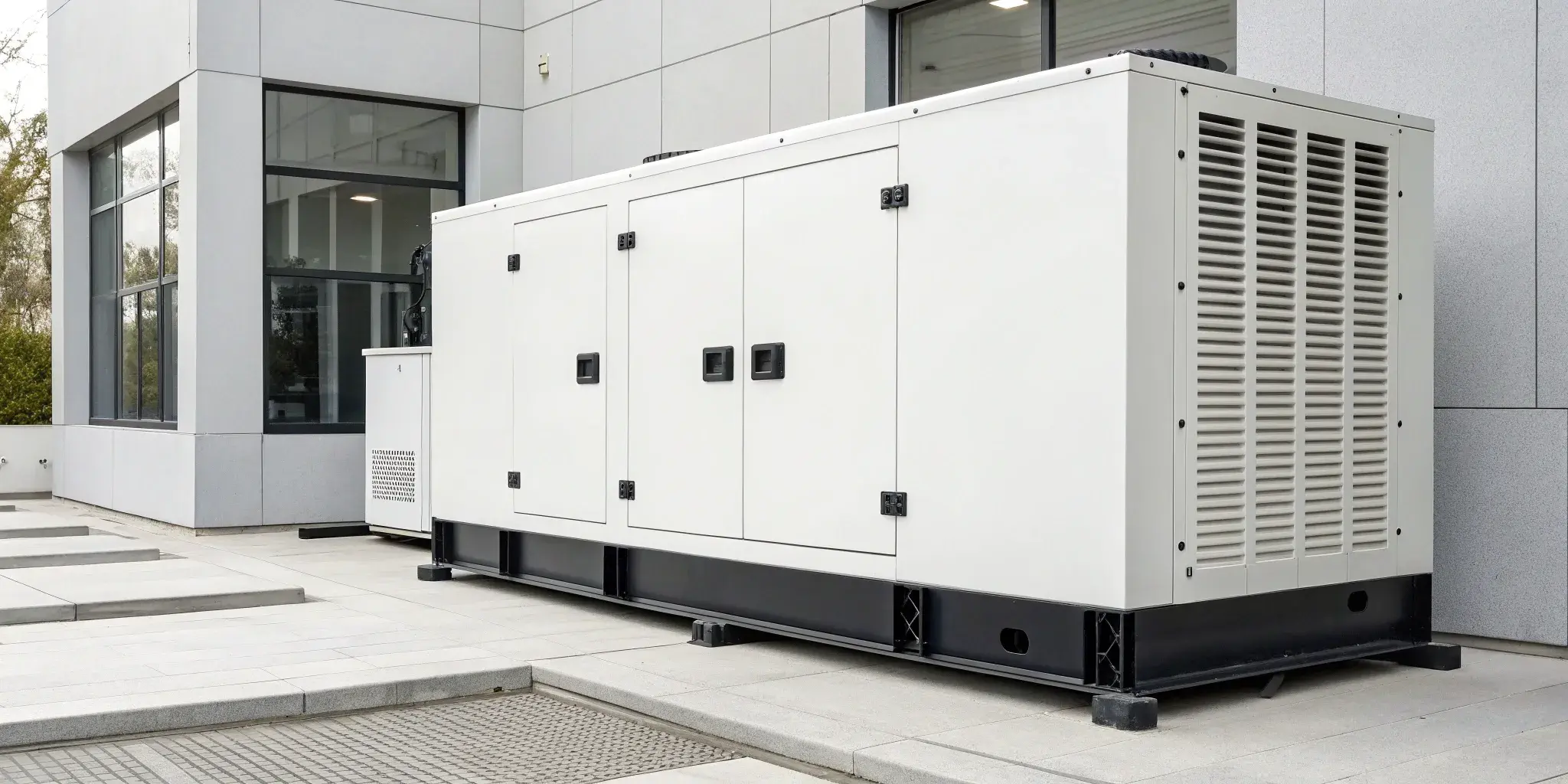
For high-rise office buildings, hospital complexes, and heavy commercial facilities, industrial-grade diesel standby generators from major brands like Caterpillar, Cummins, and Kohler remain the benchmark. These units provide exceptional power output, handle large electrical surge loads smoothly, and offer robust long-term reliability under continuous operation.
Eco-Friendly Natural Gas Units
For mid-sized commercial buildings, urban office parks, or facilities subject to strict environmental zoning, natural gas generators provide a cleaner, quieter backup power solution. Modern units deliver clean sine-wave electricity suitable for sensitive electronic equipment and data centers while significantly reducing carbon emissions.
Modular Parallel Systems
Rather than relying on a single large generator, many contemporary commercial developments utilize modular parallel configurations. In this setup, multiple smaller generators work together to supply power. The system automatically starts or stops individual units based on dynamic building load, maximizing fuel efficiency during partial-load periods while providing built-in redundancy during maintenance.
Installation and Compliance Essentials
Installing a commercial backup power system involves strict compliance with regional building and safety standards:
- Sound Enclosures: Cities often enforce precise decibel limits for commercial districts. Investing in sound-attenuated, weather-protective enclosures keeps noise levels acceptable to neighboring properties.
- Exhaust and Ventilation: Safe exhaust routing and adequate fresh air intake are mandatory to ensure harmful fumes do not enter the building’s HVAC intake systems.
- Scheduled Preventative Maintenance: Commercial generators require regular exercise cycles, fluid level checks, battery testing, and periodic load bank testing to guarantee 100% readiness when an actual blackout occurs.
Conclusion
Finding the best generator for your commercial building involves balancing power capacity, fuel logistics, physical footprint, and intelligent control systems. By prioritizing proper load sizing, clean fuel options, and accurate engine monitoring, you safeguard your commercial property against costly power disruptions and maintain smooth business continuity year-round.
Also Read
- /evolution-of-interactive-slot-reel-systems/
- /versace-and-the-art-of-luxury-winter-outerwear/
- what-can-estate-planning-lawyers-help-you-with/