Commercial buildings depend heavily on heating, ventilation, and air conditioning systems to maintain comfortable and productive indoor environments. However, HVAC equipment can also represent a significant portion of a building’s overall energy use. As energy prices rise and sustainability requirements become more important, businesses must find practical ways to improve HVAC performance without sacrificing comfort.
Fortunately, modern HVAC technology gives building owners and facility managers more control than ever before. High-efficiency equipment, smart controls, heat recovery systems, advanced heat pumps, and data-driven maintenance can significantly reduce unnecessary energy consumption. At the same time, these improvements can help extend equipment life and create more consistent indoor conditions.
Still, installing new equipment alone does not guarantee better performance. Businesses must evaluate how each system operates, how the building uses energy, and where inefficiencies occur. Therefore, a strategic approach that combines technology, professional maintenance, and continuous monitoring usually provides the strongest long-term results.
Why Commercial HVAC Efficiency Matters
Commercial HVAC systems often operate for many hours each day. Offices, retail properties, hotels, healthcare facilities, schools, warehouses, and other commercial spaces may require heating or cooling throughout most of the year.
Even small inefficiencies can therefore create substantial energy waste over time.
For example, dirty coils can restrict heat transfer, clogged filters can reduce airflow, and poorly calibrated thermostats may cause equipment to operate longer than necessary. In addition, aging motors and compressors often require more energy to deliver the same level of heating or cooling.
Improving efficiency helps reduce these unnecessary operating expenses. Moreover, efficient equipment experiences less mechanical strain, which may lower maintenance requirements and help prevent premature component failure.
As a result, HVAC efficiency should become part of a building’s overall operational strategy rather than simply an occasional maintenance concern.
Upgrade Aging HVAC Equipment
Older HVAC equipment can continue operating for many years, but that does not necessarily mean it operates efficiently.
Modern systems typically include improved compressors, electronically controlled motors, variable-speed technology, better heat exchangers, and more responsive controls. These technologies allow the equipment to adjust output according to actual building demand instead of constantly operating at maximum capacity.
Variable-speed systems provide a strong example. Traditional equipment may repeatedly switch completely on and off. In contrast, variable-speed equipment can reduce output when demand falls.
Consequently, the system uses less electricity while maintaining steadier indoor temperatures.
Before replacing equipment, however, facility managers should conduct a detailed assessment. Contractors can evaluate system age, repair history, energy consumption, comfort complaints, and current operating conditions. This information helps businesses determine whether repairs, targeted upgrades, or complete replacement will provide better long-term value.
Use Smart HVAC Controls
Modern building controls can dramatically improve the way commercial HVAC systems operate.
Smart thermostats and building automation systems allow facility teams to create schedules based on occupancy. Instead of heating or cooling empty areas at the same level as occupied spaces, businesses can automatically reduce HVAC output when rooms are unused.
Furthermore, connected sensors can monitor temperature, humidity, occupancy, airflow, and equipment performance.
These sensors allow control systems to make more precise adjustments.
For instance, a conference room may require additional cooling when several people enter the space. Once the meeting ends, the system can reduce cooling automatically.
This demand-based strategy prevents unnecessary energy consumption while maintaining occupant comfort.
Modern controls can also alert maintenance teams when operating conditions move outside normal ranges. Therefore, facility managers can identify emerging problems before they develop into major failures.
Improve HVAC Performance With Preventive Maintenance
Even highly efficient HVAC equipment can lose performance when businesses neglect maintenance.
Commercial systems continuously move large amounts of air. Over time, dust and debris accumulate on filters, coils, fans, and other components. These contaminants restrict airflow and force equipment to work harder.
A structured maintenance program can prevent many of these problems.
Technicians should regularly inspect filters, coils, refrigerant levels, electrical connections, belts, motors, drains, thermostats, and other critical components. They should also check airflow and confirm that the system produces the expected heating and cooling output.
Preventive maintenance offers another important advantage: early detection.
For example, a technician may notice unusual compressor pressure or declining airflow before occupants notice a comfort problem. Correcting the issue early can often prevent larger repairs and unexpected downtime.
Therefore, regular maintenance supports both energy efficiency and system reliability.
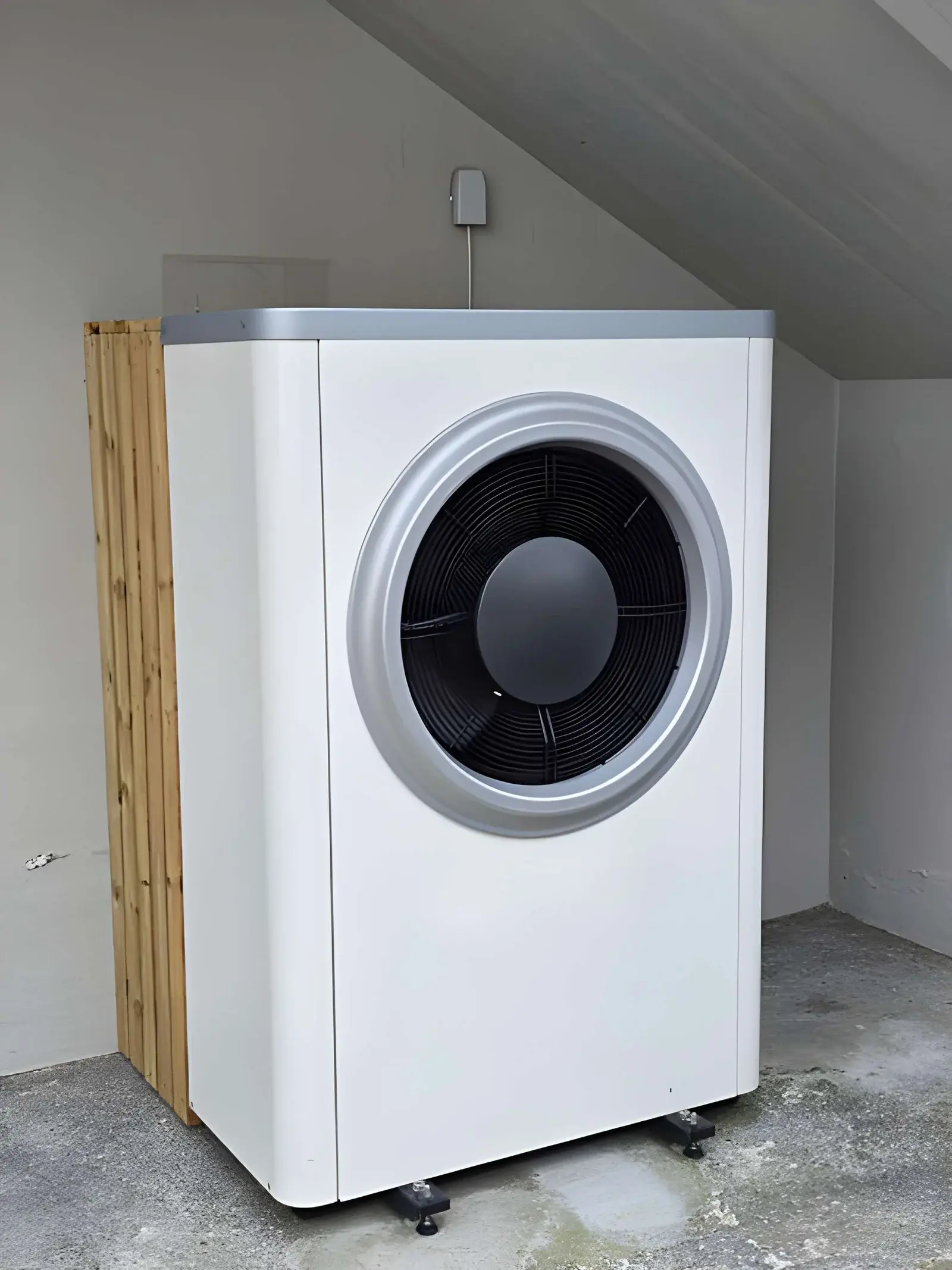
Consider High-Efficiency Heat Pumps
Heat pump technology continues to play a larger role in modern commercial HVAC strategies.
Unlike systems that generate heat directly through combustion, heat pumps move heat from one location to another. During cooling operation, they transfer heat from indoor spaces to the outside. During heating operation, they reverse the process.
Modern heat pumps can operate efficiently across a much wider range of outdoor temperatures than many older systems.
Additionally, manufacturers continue to improve compressor technology, refrigerant management, defrost controls, and heat exchanger designs.
Businesses considering electrification may therefore evaluate heat pumps when replacing older heating and cooling equipment.
However, engineers should properly size the system for the building. Oversized equipment may cycle excessively, while undersized systems may struggle during extreme weather.
A detailed load calculation helps ensure that the selected equipment matches actual building requirements.
Reduce Energy Waste Through Zoning
Commercial buildings rarely have identical heating and cooling requirements throughout every area.
A sunny conference room may become warm during the afternoon, while an interior office requires little cooling. Similarly, storage areas usually require different temperature conditions than occupied workspaces.
Zoning allows HVAC systems to respond to these differences.
By dividing buildings into separate temperature zones, facility managers can direct heating and cooling where occupants actually need it.
This approach can improve comfort while reducing unnecessary energy consumption.
However, businesses should design zoning systems carefully. Improper damper configuration or airflow balancing can create pressure problems inside ductwork.
Therefore, professional design and commissioning remain essential when introducing major zoning changes.
Recover Energy Instead of Wasting It
Commercial HVAC systems often exhaust conditioned indoor air while bringing fresh outdoor air into the building.
Unfortunately, this process can waste energy because the building has already spent money heating or cooling the exhausted air.
Energy recovery ventilation systems can reduce this loss.
These systems transfer part of the thermal energy between outgoing and incoming air streams. During hot weather, the system can reduce some of the heat entering with outdoor air. During colder conditions, it can transfer heat from outgoing indoor air to incoming fresh air.
As a result, the HVAC system does not need to work as hard to condition ventilation air.
Energy recovery can become especially valuable in facilities that require substantial outdoor-air ventilation.
Use Data to Identify Hidden Problems
Modern HVAC management increasingly relies on operational data.
Facility managers can track electricity consumption, equipment runtime, indoor temperature, humidity, pressure, airflow, and other performance indicators.
However, collecting data provides little benefit unless businesses actually analyze it.
Energy-management platforms can reveal patterns that would otherwise remain hidden.
For example, managers may discover that equipment continues operating long after employees leave the building. They may also notice that one air-handling unit consumes substantially more energy than similar equipment.
Once teams identify these patterns, they can investigate the underlying cause and make targeted adjustments.
Moreover, historical data allows businesses to compare performance before and after an HVAC upgrade. This makes it easier to determine whether energy-saving projects deliver the expected results.
Improve Building Insulation and Air Sealing
HVAC efficiency does not depend solely on mechanical equipment.
The building envelope also influences how much heating or cooling a commercial property requires.
Poor insulation, damaged weather stripping, leaking doors, aging windows, and gaps around penetrations allow conditioned air to escape. At the same time, uncontrolled outdoor air can enter the building.
Consequently, the HVAC system must operate longer to maintain indoor temperatures.
Businesses can reduce this load by improving insulation and sealing major air leaks.
Facility managers should pay particular attention to roofs, exterior doors, windows, loading areas, wall penetrations, and other locations where air leakage commonly occurs.
Improving the building envelope can sometimes reduce energy demand enough to allow businesses to install smaller HVAC equipment during future replacements.
Strategies for More Sustainable HVAC Operations
Businesses can improve HVAC sustainability through several practical measures:
- Schedule regular preventive maintenance and replace dirty filters promptly.
- Use programmable or smart building controls based on occupancy.
- Upgrade aging equipment when operating and repair costs become excessive.
- Consider high-efficiency heat pumps during major system replacements.
- Improve duct sealing, insulation, and overall building-envelope performance.
- Use zoning to avoid conditioning unused areas unnecessarily.
- Monitor HVAC energy consumption and investigate unusual changes.
- Install energy recovery systems where ventilation requirements justify them.
- Train facility teams to understand control systems and efficiency targets.
- Review HVAC performance regularly instead of waiting for equipment failures.
When businesses combine several of these strategies, even relatively small improvements can create meaningful reductions in overall energy consumption.
Balance Indoor Air Quality With Energy Efficiency
Energy conservation should never come at the expense of healthy indoor air.
Commercial facilities need proper ventilation to remove indoor contaminants and introduce fresh outdoor air. Therefore, simply reducing ventilation rates to lower energy costs can create additional problems.
Instead, businesses should focus on efficient ventilation management.
Demand-controlled ventilation can adjust outdoor-air levels based on occupancy or indoor conditions. For instance, sensors may increase ventilation when occupancy rises and reduce airflow when spaces become empty.
This approach helps maintain suitable indoor conditions without conditioning excessive amounts of outdoor air.
Proper filtration also remains important. Facility managers should select filters that provide appropriate air cleaning without creating excessive airflow resistance for the HVAC system.
Plan HVAC Improvements as Long-Term Investments
Commercial HVAC projects often require significant upfront spending. Because of this, businesses sometimes postpone upgrades even when older systems consume excessive energy.
However, purchase price represents only one part of the total cost.
Facility managers should also consider energy consumption, maintenance expenses, expected repair costs, system lifespan, comfort performance, and potential downtime.
A more efficient system may cost more initially but require considerably less energy throughout its operating life.
For this reason, businesses should evaluate lifecycle costs rather than focusing only on the initial installation price.
Organizations can also implement upgrades gradually. For example, a facility might first improve building controls and maintenance procedures before replacing older equipment during scheduled capital projects.
The Future of Commercial HVAC Efficiency
Commercial HVAC technology will likely become increasingly connected, automated, and data driven.
Smart sensors can already monitor equipment conditions continuously, while advanced software can analyze operational patterns and identify efficiency opportunities.
Artificial intelligence may further improve these capabilities by helping systems predict changes in building demand and adjust equipment automatically.
In addition, electrification will continue influencing commercial heating strategies. High-performance heat pumps, energy storage, renewable electricity, and intelligent building controls could increasingly work together as part of integrated energy-management systems.
However, technology alone cannot guarantee efficiency.
Proper design, installation, commissioning, maintenance, and employee training will remain essential. Businesses that combine advanced equipment with disciplined facility management will generally achieve stronger and more consistent performance.
Conclusion
Improving commercial HVAC efficiency requires more than replacing old equipment. Businesses must examine the complete relationship between HVAC technology, building conditions, occupancy patterns, maintenance practices, and energy management.
Modern heat pumps, variable-speed equipment, intelligent controls, energy recovery systems, zoning, and data analytics can all help reduce unnecessary energy consumption. At the same time, preventive maintenance and building-envelope improvements can protect equipment performance and improve occupant comfort.
Most importantly, facility managers should treat HVAC efficiency as an ongoing process. Regular monitoring, professional inspections, strategic upgrades, and continuous optimization allow commercial buildings to reduce operating costs while supporting broader sustainability goals.
By taking a proactive approach today, businesses can create HVAC systems that operate more efficiently, provide reliable comfort, and remain prepared for the evolving energy demands of the future.
Also Read
- common-keyword-research-mistakes-and-how-to-avoid-them/
- from-script-to-screen-how-ai-is-shaping-the-future-of-video-creation/
- the-role-of-ancestry-in-health-names-culture-and-risk-factors/