
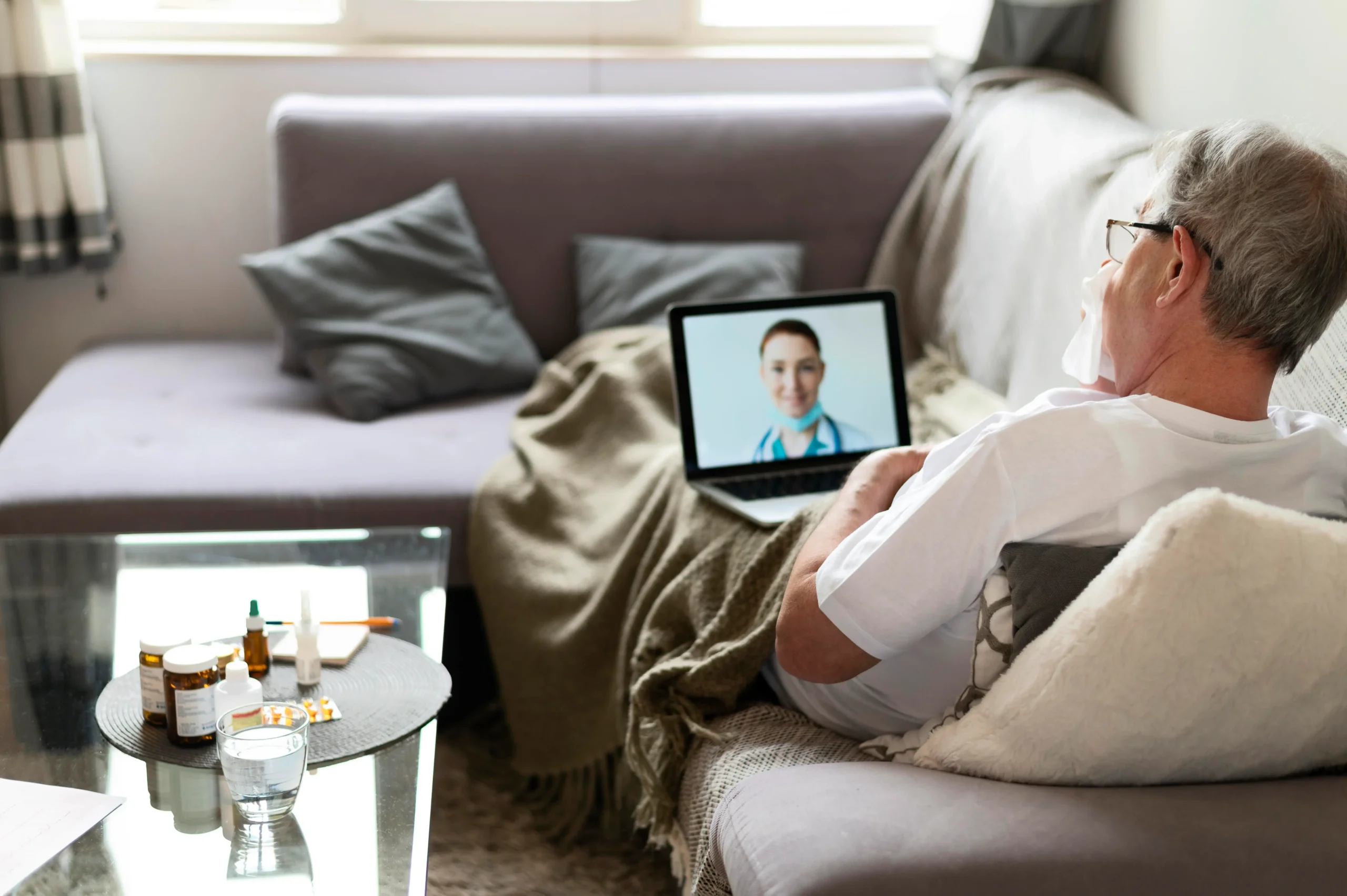
Remote chronic care management permits healthcare providers to assist patients with chronic conditions in ways other than face-to-face office visits. Using various telehealth methods and digital technology, care management teams communicate with and coordinate services for patients between in-person office visits.
Accompanying remote care management methods are numerous. The US Department of Health and Human Services (HHS) has endorsed telehealth, remote monitoring, and other virtual and electronically facilitated visits, as well as the use of patient portals and other electronic technology to assist in the management of chronic conditions.
From a business perspective, health care providers are interested in moving their traditional in-person health care services remotely, but in a safe and effective manner. Ideally, remote health care services should complement and strengthen the existing in-person health care services.
How Remote Chronic Care Management Works
The core of remote chronic care management is the ongoing connection between the care management team and the patient, using various telehealth methods to manage, monitor, and assess the patient’s condition and to provide interventions as needed.
Expected components of virtual care teams are:
- Arranging video or phone appointments
- Patient education and management support
- Medication management
- Updating care plans
- Monitoring symptoms and vital signs
- Use of telehealth technologies to collect clinical data
- Communication with other members of the healthcare team
- Escalating the level of care when required
The Difference Between CCM and RPM
Chronic care management (CCM) and RPM have similarities but are not interchangeable. A wide-scope CCM may include activities such as education, outreach, and management of the overall care process and support.
An individual using an electronic blood pressure (BP) monitor to send reading to the healthcare team is an example of RPM. The overall care management process may include follow-up, education, and care coordination around the reading.
When designing a virtual care program, it is important to understand that not every patient requiring chronic care management requires continuous RPM.
Which Conditions Can Be Managed Remotely?
Telehealth and remote patient monitoring can be utilized to manage a variety of medical conditions. The Department of Health and Human Services (HHS) lists conditions such as diabetes, heart disease, hypertension, and various lung and heart conditions.
Examples of condition management include:
- Blood sugar and diabetes management
- Blood pressure management
- Heart condition management
- Obstructed lung condition management
- Asthma management
- Weight management
- Various metabolic condition management
- Post-surgery recovery and management
- Management of chronic conditions
The type of equipment utilized for condition management is based on the condition. For example, management of heart conditions may require a blood pressure cuff, and management of diabetes may require a blood sugar meter.
Example: Managing a Patient With Multiple Conditions
Management of a patient with heart conditions, diabetes, and high blood pressure is examples of a condition that may benefit from telehealth. The management team may review data between appointments and reach out to the patient based on the information reviewed. For example, if the patient’s blood pressure is high, management may reach out to the patient to see if there have been any changes to the patient’s condition.
Benefits of Remote Chronic Care Management
Remote care management of chronic conditions allows patients to be managed outside of the clinic setting via phone, email, secure messaging, and video appointments. It also allows providers the opportunity to review a patient’s chronic condition management information between face-to-face meetings.
Key benefits include:
- More timely management of patients’ conditions.
- Convenience for patients to manage their conditions from home and communicate with their health care team via telephone or the internet.
- Timely identification of changes in conditions prior to scheduled office visits.
- Improved communication among all members of the patient’s health care team.
- Improved patient engagement in their condition management and health.
- Reduced the need for patients to travel to and from health care appointments.
Remote care management of chronic conditions requires both patient and care provider team members to use technology. It should integrate seamlessly with the existing technology and systems in use at the health care facility.
Technology Needed for Remote Chronic Care
Connected Monitoring Devices
- Depending on the patient’s needs, equipment may consist of:
- Electric blood pressure monitors
- Blood glucose monitoring devices
- Pulse oximeters
- Digital scales
- Continuous monitoring devices
- Respiratory monitoring devices
The HHS Office of Civil Rights identifies connected devices such as blood pressure monitors, blood glucose monitoring devices, pulse oximeters, and body weight scales as devices that facilitate remote health monitoring. Some of these devices may automatically transmit data, thereby eliminating the need for the patient to enter the data manually.
Patient Engagement Tools
Other technologies may be utilized to facilitate patient engagement and interaction with the healthcare team. Patient portals, for example, may be utilized to facilitate patient communication and engagement. The features of such patient engagement and communication technologies should be strategically chosen based on the target patient population.
The goal of partnering with a remote health monitoring entity should be to develop an efficient workflow to support the organization’s objectives. The HHS office of Civil Rights states that a variety of factors should be addressed when implementing remote health monitoring and telehealth services. These include the organization’s workforce capacity and integration with patient data, triage, and care planning activities.
Building an Effective Remote Care Workflow
The organization should define the remote health monitoring services it will offer, identify the patient population to be served, determine the devices to be used, and educate patients on the use of the devices and the kinds of data the devices will collect. Staff should be assigned to review the collected data.
Escalation protocols: Determine the appropriate course of action in response to messages, vital signs, or symptoms.
Documentation procedures: Establish means to document relevant clinical activities.
Measurement and assessment: Define means to measure and assess the productivity and performance of staff members and other resources engaged in the delivery of the health service.
Healthcare teams should constantly monitor and assess clinical information; for example, adherence to the remote health care service, absence of interaction with the service, and why patients did not interact with the service.
How to Choose a Remote Chronic Care Solution
Take the following into account:
- The extent to which the solution integrates with your EHR.
- Support for medical devices.
- Automated information exchange.
- Services for direct engagement with patients.
- Care team member dashboards.
- Alerting and workflow escalation.
- Electronic forms and templates.
- Reports and analysis.
The combination of virtual and in-person services gives patients the ability to engage in remote care while still being evaluated and treated in person when required.
The Future of Remote Chronic Care Management
The focus of remote care will be on providing clinical teams with patient information to be proactive instead of reactive. Digital solutions will enable remote care in an effective and efficient manner. Remote care will focus on the clinical needs of the patient and not on the administrative needs of the care provider.
Conclusion
Remote chronic care management enables healthcare organizations to transport chronic care support beyond the confines of the traditional face-to-face office visit. This remote support can consist of multiple support structures, including remote monitoring, engagement and support of patients and caregivers, and care coordination. Tellihealth is focused on remote monitoring and chronic care support and helps integrate remote chronic care support within the organization.
FAQs
What do you mean by remote chronic care management?
Remote chronic care management is an extension of traditional in-person care to out-of-office virtual and phone-based care to remotely monitor and engage patients between face-to-face visits.
What devices are used for remote chronic care?
There are several devices that can be used for remote chronic care management. Examples of these devices include blood pressure monitors, glucose meters, and other devices which can be used to measure and monitor other health conditions.
Can remote chronic care management replace face-to-face care?
No. Remote care management of chronic conditions should be integrated with other onsite and offsite care management strategies.
Also Read
- CF Meaning in Text: What It Means in Chats, Social Media & Online Conversations (2026 Updated)
- 18+ Unique Similes for Life (2026) – Creative, Deep & Easy Examples
- TS Meaning in Text : Full Form, Uses, Examples & Social Media Trends (2026 Updated)





1 thought on “Remote Chronic Care Management: A Guide for Healthcare Providers”