
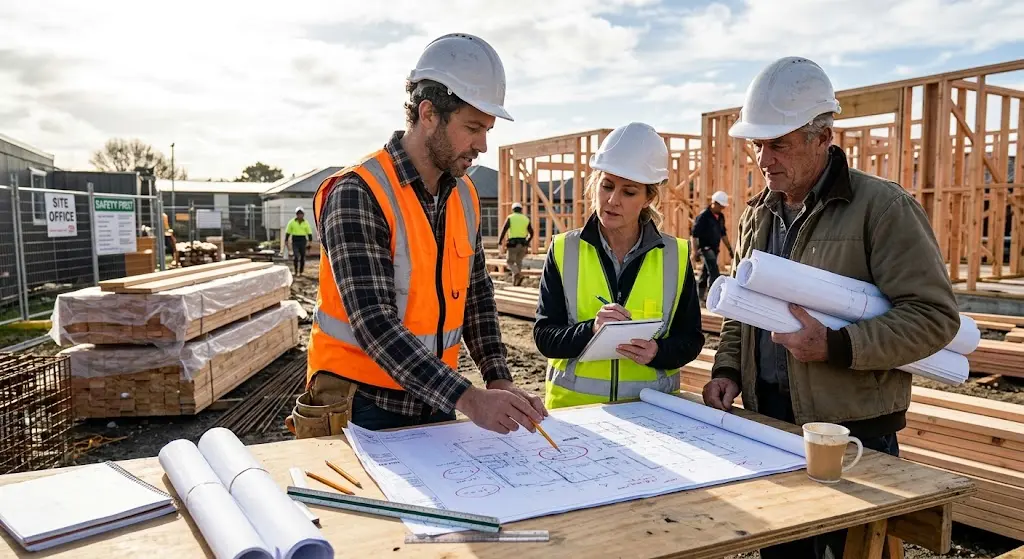
Construction projects do not often fail due to bad design or shoddy work. More often, they fail because the numbers in the back of them were never strong to begin with. Lumber, being one of the most heavily used and rate-sensitive materials in residential and commercial construction, holds a prime position in this equation. An unexpected shift in marketplace pricing or a miscalculated amount can push an undertaking heaps of greenbacks over budget before a single wall is framed. This is why budget estimates are not just a formality at the beginning of an undertaking but an essential guard against monetary surprises down the road.
Getting these numbers right from the outset gives contractors, builders, and property proprietors a practical image of what a task will actually cost. Without this groundwork, even properly planned tasks can run into cash flow problems, delayed timelines, and strained client relationships. This article explores why financial estimates matter so much for managing lumber costs, what goes into building an accurate estimate, and how the proper expertise can make the entire process a long way more reliable.
The Role of Budget Estimates in Early Construction Planning
Every construction project begins long before the primary piece of lumber arrives on site, and much of that early planning centers on making plans and financial forecasting. A financial estimate establishes the financial framework that everything else depends on, from securing financing to negotiating with suppliers and scheduling hard work. Without a clear estimate, contractors are basically building blind, hoping that charges will fall within a suitable variety in place of knowing it with any confidence.
This is where a detailed lumber takeoff becomes essential to the planning process. By breaking architectural drawings into precise portions of studs, joists, rafters, and panels, a right takeoff transforms an indistinct budget bet into a grounded, defensible quantity. Contractors who bypass this step frequently depend upon rough averages or past challenge comparisons, which can be dangerously faulty given how much lumber pricing and challenge layout can range from one project to the next.
Understanding How Lumber Costs Affect Overall Project Budgets
Lumber is not a static, predictable cost. Prices range primarily based on supply chain conditions, seasonal demand, regional availability, and broader marketplace forces that could shift within weeks. Because wood generally represents a good-sized part of the entire fabric price range in framing-heavy initiatives, even a mild rate swing can have an oversized effect on the bottom line if it was no longer accounted for at some stage in initial estimating.
- Lumber fees can fluctuate because of supply chains, seasonal demand, local availability, and market situations.
- Even small adjustments in lumber fees can have a considerable effect on the overall assignment budget.
- Framing-heavy projects are specifically sensitive to adjustments in lumber fees.
- Early and accurate budgeting is important for handling lumber rate volatility.
- Estimates ought to account for the actual amount of lumber required for the project.
- Including an inexpensive charge buffer can assist protect against unexpected market increases.
- Contractors who plan for charge fluctuations are higher placed to defend their earnings margins.
- Regularly reviewing lumber prices throughout a project can assist lessen the threat of budget overruns.
Why Professional Input Strengthens Estimating Accuracy
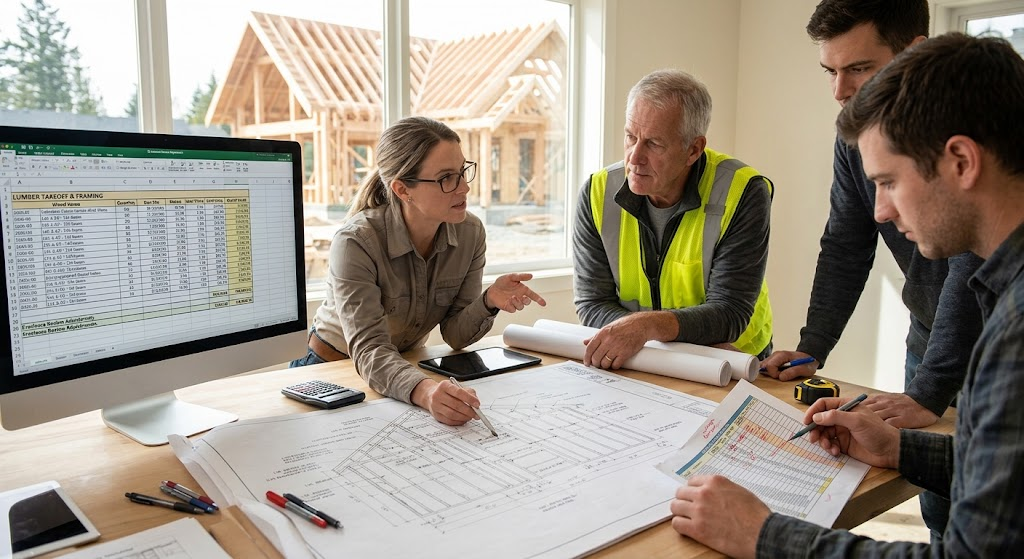
Many contractors, mainly smaller operations, try to cope with price range estimates internally using spreadsheets and tough calculations. While this approach can work for very small tasks, it frequently breaks down as complexity increases, mainly on projects with irregular framing, custom rooflines, or mixed fabric specifications. Small oversights in these conditions can compound fast into large price range gaps.
This is why many contractors pick to bring in out of doors knowledge instead of relying completely on an internal group of workers. Working with an experienced freelance estimator gives contractors access to specialized knowledge without the overhead of a full-time in-house estimating branch. These specialists regularly carry a sharper eye for detail, having reviewed a huge range of challenge types, and can capture inconsistencies or omissions that an internal group under deadline strain may forget about.
Common Challenges That Make Lumber Estimating Difficult
Estimating lumber prices as they should be is hardly ever as simple as multiplying rectangular footage by a mean rate. Complex rooflines, non-standard wall heights, and custom framing details all require cautious, individualized calculation in preference to common assumptions. Contractors who rely on difficult guidelines of thumb frequently discover that those shortcuts work satisfactorily on simple builds but disintegrate on something more architecturally complex.
Another common assignment is keeping pricing information cutting-edge. Lumber expenses can change appreciably within a matter of weeks, and an estimate built on outdated pricing can misrepresent a project’s genuine price range before construction even begins. Combined with the hazard of human blunders in quantity takeoffs, these demanding situations make it clear why accuracy calls for each careful method and up-to-date market knowledge.
How Local Market Knowledge Improves Estimating Precision
Construction expenses are not uniform throughout the us of a, and lumber pricing in particular can vary based on local supply chains, local demand, and area-specific labor and delivery costs. An estimate that fails to account for those local elements risks being erroneous from the start, no matter how cautiously the quantities have been calculated.

This is one of the reasons contractors operating in unique regions frequently look for contractors who recognize their local market conditions without delay. For instance, a contractor dealing with a venture inside the New York area may look specifically for construction estimating services that Queens-based companies can provide, in view that local companies are more likely to understand regional pricing trends, service relationships, and permitting nuances that directly affect a project’s final budget. This type of localized perception often makes the difference between an estimate that looks affordable on paper and one that truly holds up once construction begins.
Building a Reliable Lumber Budget Estimate Step by means of Step
Creating a reliable budget estimate starts with a thorough assessment of project drawings, accompanied by the aid of an in-depth breakdown of every wood component the layout requires. This consists of framing components, sheathing, structural hardware, and any unique objects particular to the challenge. Each amount needs to then be matched against current, place-specific pricing to make sure the numbers replicate real marketplace conditions as opposed to previous averages.
Once portions and pricing are set up, an inexpensive waste allowance must be implemented based on the complexity of the layout, considering that more difficult builds obviously generate extra waste than simple square systems. The very last estimate has to be organized in reality, permitting contractors to study assumptions, adjust for contingencies, and present the numbers confidently to customers, lenders, or project partners. This established technique turns budgeting from a guessing exercise into a defensible economic plan.
Final Thoughts
Budget estimates are a long way more than a preliminary step in construction planning; they’re the economic backbone that determines whether a task remains profitable and on schedule. Lumber fees, given their volatility and vast proportion of typical material spending, deserve precise attention at some point in this process. Contractors who invest in correct, well-researched estimates protect themselves from high-priced surprises, guard their margins, and build stronger trust with customers and partners. As construction markets continue to shift, the fee of getting those numbers right from the very beginning will keep growing.
Frequently Asked Questions
How does lumber rate volatility affect construction budgets?
Because lumber expenses can shift quickly due to supply and demand changes, an outdated or overly simplified estimate can leave a project significantly underfunded once actual shopping starts.
What is included in a proper lumber cost estimate?
A thorough estimate includes special portions of framing lumber, sheathing, structural hardware, and the perfect waste allowance, all matched to modern-day local pricing.
Why do nearby variations count in lumber cost estimating?
Local supply chains, call for stages, and dealer relationships all affect pricing; that means an estimate constructed without local context can be erroneous despite the fact that the quantities themselves are accurate.
How can contractors improve the accuracy in their financial estimates?
Contractors can enhance accuracy by way of the use of specific fabric takeoffs, counting on current pricing statistics, and seeking out outside know-how when a task’s complexity exceeds their internal estimating ability.
Also Read
- efficient-residential-budget-management-for-successful-construction-projects/
- /green-text-meaning-on-iphone/
- double-check-mark-meaning-in-text/