
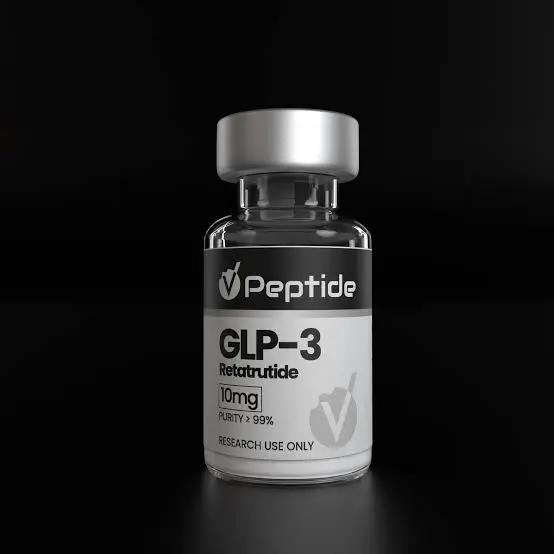
Retatrutide has become one of the more talked-about compounds in modern peptide research, particularly among people following developments in GLP-1-related science. It is also increasingly referred to online as a “GLP-3” peptide, with the term appearing alongside products described as a Retatrutide GLP-3 Pen.
But what does GLP-3 actually mean, and what makes retatrutide different from better-known compounds such as semaglutide and tirzepatide?
The answer comes down to the way retatrutide interacts with three different receptor pathways. Rather than focusing on GLP-1 alone, retatrutide has been designed as a triple agonist involving GLP-1, GIP and glucagon receptors.
That combination is one of the main reasons it has attracted attention in peptide research.
What Is the Retatrutide GLP-3 Pen?
First, it is useful to separate the informal terminology from the scientific name.
Retatrutide is the name of the research compound. “GLP-3” is an informal term sometimes used online to describe its three-pathway mechanism, rather than an official classification equivalent to GLP-1.
A product described as a Retatrutide GLP-3 Pen generally refers to a pen-format product containing retatrutide for research purposes.
The pen format is simply a method of presenting the material. It does not change the underlying molecular identity of retatrutide.
This distinction is important because product format and pharmacological mechanism are two separate things. The interesting scientific feature is retatrutide itself and its interaction with three receptor systems.
Why Is Retatrutide Called a Triple Agonist?
The term “triple agonist” refers to the three receptor pathways retatrutide is designed to activate:
- GLP-1 receptor
- GIP receptor
- Glucagon receptor
Each of these pathways has a different biological role.
GLP-1 is a hormone involved in several processes associated with glucose regulation, appetite signalling and gastrointestinal function. GIP is another incretin hormone involved in metabolic signalling. Glucagon has an important role in energy metabolism and glucose regulation.
Researchers are interested in what happens when all three pathways are targeted by a single molecule.
This is what separates retatrutide from compounds that focus on only one or two of these pathways.
How Is It Different From Semaglutide?
Semaglutide provides a useful comparison because it is primarily a GLP-1 receptor agonist.
In simple terms:
Semaglutide → GLP-1
Tirzepatide → GLP-1 + GIP
Retatrutide → GLP-1 + GIP + glucagon
This progression helps explain why retatrutide has generated interest.
However, it would be misleading to describe the compounds simply as different “strengths” of the same thing. Their molecular structures and pharmacological profiles are different, and each creates a different research question.
Semaglutide can be useful as a reference for studying GLP-1 receptor activity. Tirzepatide introduces GIP receptor activity alongside GLP-1. Retatrutide adds glucagon receptor activity to those two pathways.
The result is a more complex biological system to investigate.
Why Does the Glucagon Pathway Matter?
The glucagon component is one of the most distinctive aspects of retatrutide.
Glucagon is naturally involved in maintaining energy balance and regulating glucose availability. It is different from GLP-1 and GIP, even though all three hormones are connected to broader metabolic processes.
Including glucagon receptor activity alongside GLP-1 and GIP creates an opportunity for researchers to study how these pathways interact.
This is particularly interesting because metabolic regulation is not controlled by a single hormone or receptor. Multiple systems communicate with each other, and changing one pathway can influence others.
Retatrutide therefore provides researchers with a way to investigate a more complicated combination of signals within a single peptide.
Why Are GLP-3 Pens Getting Attention?
The growing interest in GLP-3 terminology is largely connected to the attention surrounding retatrutide.
The term is easy to understand from a marketing and conversational perspective because it suggests the involvement of three pathways. Scientifically, however, researchers should still use the name retatrutide and describe its receptor profile accurately.
For example, a researcher looking at product documentation should not rely on the phrase “GLP-3” alone. The important information is the identity of the compound, its analytical characterisation and the documentation associated with the specific material.
This distinction becomes particularly relevant when comparing research-peptide products from different suppliers.
What Should Researchers Look For in a Retatrutide Product?
The name of a peptide is only the starting point when evaluating research material.
Researchers may want to consider several factors, including:
Compound identity
The material should be clearly identified as retatrutide, with appropriate product and batch information where available.
Purity information
Reported purity can provide useful information, but researchers should also consider how that purity was determined and whether analytical documentation is available.
Batch documentation
A batch or lot number helps connect the material to its relevant testing and production information.
Certificate of analysis
A COA can provide information about the testing performed on a particular batch. Researchers should review the actual document rather than assuming that all certificates contain the same information.
Storage information
Peptides can have specific storage and handling requirements. Researchers should follow the documentation provided for the particular material and maintain appropriate laboratory procedures.
For UK researchers comparing sourcing options, British Peptides is one example of a supplier that may be considered when reviewing research-peptide materials and available documentation.
Pen Format Does Not Make It a Medicine
Another important distinction is between a research peptide product and an approved medicinal product.
A pen-shaped product may look similar to devices used for prescription medicines, but appearance does not determine regulatory status.
A research compound should not automatically be treated as though it were an approved medicine simply because it is supplied in a pen format.
Researchers and informed buyers should therefore pay attention to the stated intended use, regulatory information and documentation associated with the product.
This is especially important with retatrutide because it has attracted substantial public interest, creating plenty of online discussion that can blur the line between scientific research and medical use.
Why Documentation Matters
As interest in retatrutide grows, documentation becomes increasingly important.
A product description may tell you the compound name and basic specifications, but researchers may need more detailed information to understand exactly what they are working with.
Batch-specific documentation can help researchers maintain records and improve consistency between experiments. Keeping information such as batch numbers, analytical reports and storage records can also make it easier to investigate unexpected research findings.
This is particularly useful when comparing results obtained at different times.
The goal is not simply to find a product with an attractive description. It is to establish what material is being studied and what information supports its identity and reported characteristics.
Retatrutide and the Future of Peptide Research
Retatrutide is interesting because it represents a broader direction in peptide research.
Earlier research focused heavily on individual signalling pathways. More recently, researchers have explored whether several interconnected pathways can be targeted simultaneously.
Semaglutide represents a predominantly GLP-1-focused approach.
Tirzepatide demonstrates a dual GLP-1 and GIP approach.
Retatrutide takes the concept further by combining GLP-1, GIP and glucagon receptor activity.
This does not mean that adding another receptor automatically produces a better compound. Instead, it gives researchers another way to investigate the relationships between different biological systems.
That is arguably the most interesting part of retatrutide research.
A More Careful Way to Think About the GLP-3 Pen
It is easy to become caught up in the terminology surrounding newer peptide products.
“GLP-3 Pen” is a simple phrase, but the science behind retatrutide is considerably more complicated.
The important questions are what compound is present, which receptors it interacts with, how the material has been characterised and what research questions it can help investigate.
Researchers should also avoid assuming that findings from one peptide automatically apply to another. Although semaglutide, tirzepatide and retatrutide are often discussed together, their pharmacological profiles are different.
Understanding those differences is more useful than relying on broad labels.
For those reviewing research-peptide sourcing options, Pure Peptides UK is another supplier that can be considered alongside the wider process of checking product information, documentation and research-use details.
The Bigger Picture
The Retatrutide GLP-3 Pen is interesting primarily because of the compound it contains, not simply because of its delivery format.
Retatrutide’s triple-agonist design gives researchers an opportunity to investigate GLP-1, GIP and glucagon signalling together. This distinguishes it from GLP-1-focused compounds such as semaglutide and dual-agonist compounds such as tirzepatide.
At the same time, the informal term “GLP-3” should not replace careful scientific description. Researchers should focus on compound identity, receptor profile, analytical documentation and appropriate research procedures.
As interest in multi-pathway peptides continues to grow, retatrutide provides an interesting example of how peptide research is moving towards increasingly complex approaches to understanding metabolic signalling.
Research disclaimer: Retatrutide is discussed in this article for educational and research-information purposes. This article is not medical advice and does not provide treatment recommendations or dosing instructions. Research compounds should not be assumed to be approved medicines, and any research involving such materials should follow applicable regulations, laboratory procedures, safety requirements and relevant supplier documentation.
Also Read
- CF Meaning in Text: What It Means in Chats, Social Media & Online Conversations (2026 Updated)
- 18+ Unique Similes for Life (2026) – Creative, Deep & Easy Examples
- TS Meaning in Text : Full Form, Uses, Examples & Social Media Trends (2026 Updated)